
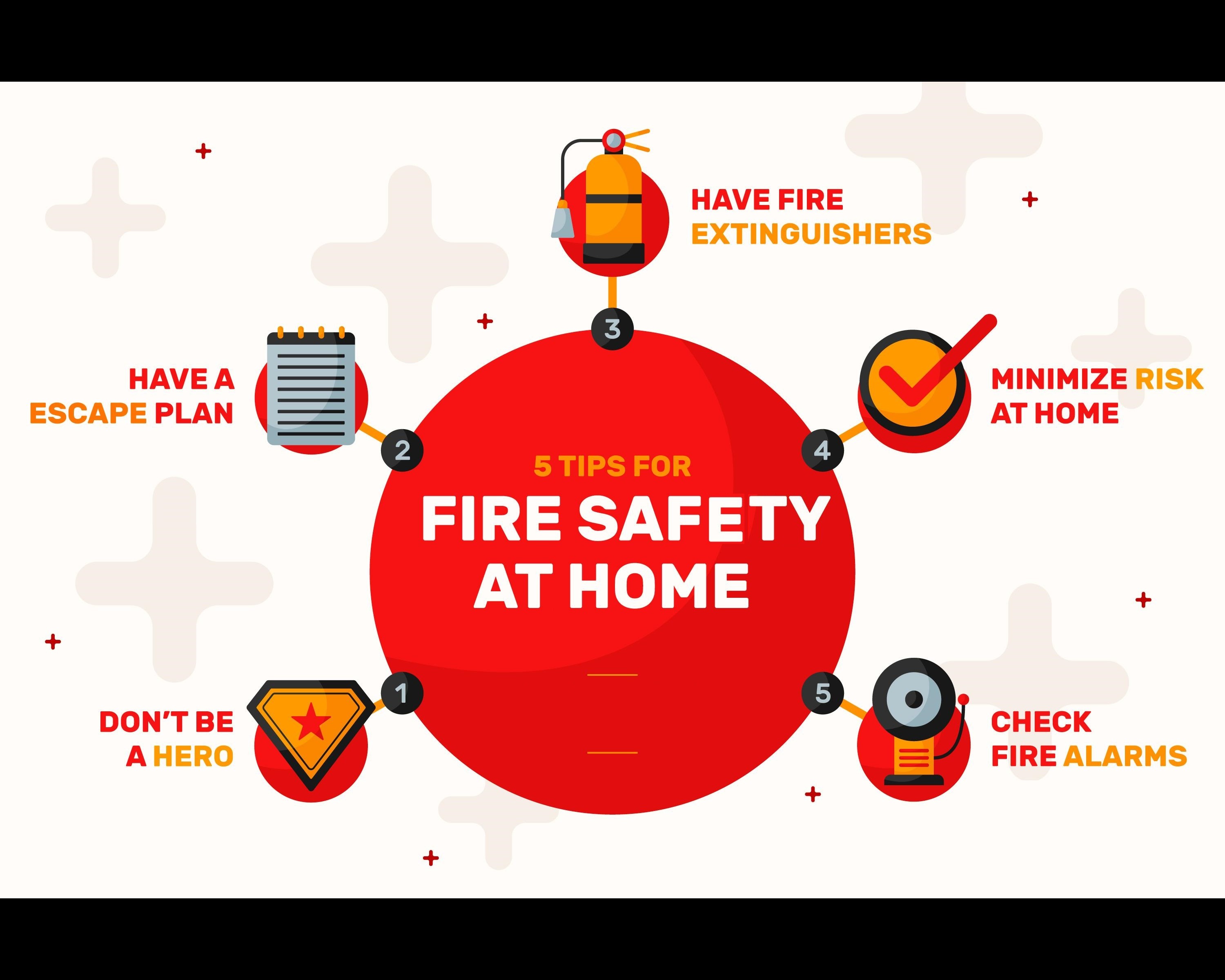
Basic safety and fire awareness are essential for all residents to prevent emergencies and ensure a quick response if a fire occurs. A little care and planning can save lives and property. Fire prevention: Reduce your risk Install and maintain smoke alarms: Install smoke detectors on every level of your home, in each sleeping room, and outside each separate sleeping area. Test smoke alarms monthly by pushing the test button, and replace all units every 10 years. Create an escape plan: Plan at least two routes out of every room in the house and designate a safe meeting place outside. Make sure everyone knows the plan and practice it regularly with household members. Check electrical safety: Avoid overloading electrical outlets and do not use extension cords for permanent wiring. Ensure all electrical cords are in good condition, and replace any that are frayed or damaged. Store flammable materials properly: Keep flammable items like paint and gas cylinders in designated storage areas away from ignition sources. Never store flammable liquids in common areas like hallways or stairwells. Practice kitchen safety: The kitchen is a leading cause of residential fires. Never leave cooking unattended and keep anything that can burn, such as paper towels and oven mitts, away from the stove. Manage heating equipment: Keep a 3-foot “kid-free zone“ and clearance around all heating equipment, including furnaces, fireplaces, and space heaters. Turn off portable space heaters when you leave a room or go to sleep. Handle smoking materials with care: Never smoke in bed, and use deep, sturdy ashtrays. Soak cigarette butts and ashes in water before throwing them away. Use candles safely: The safest option is not to use candles, but if you do, keep them away from flammable materials like curtains and clothing. Never leave candles or incense unattended. Fire emergency: What to do Stay calm and alert others: In case of a fire, the first step is to stay calm and alert everyone on the premises by shouting “fire“. Escape first, then call for help: Your top priority is to get out of the building. Once you are safely outside, call the fire department from a cell phone or a neighbor's phone. Crawl low in smoke: If you encounter smoke, get down on your hands and knees and crawl. The air will be cleaner near the floor. Use the nearest safe exit: Always use the stairs, not the elevator, during a fire. Close doors behind you as you exit to help contain the fire's spread. If trapped in a room: If your primary escape route is blocked, go to a room with a window, close the door, and place a towel or bedding at the bottom to block smoke. Call for help from the window. Don't go back inside: Never re-enter a burning building for any reason. If someone is trapped, inform the firefighters when they arrive. “Stop, drop, and roll“: If your clothes catch fire, stop immediately, drop to the ground, and roll to smother the flames. Know your fire extinguishers: Familiarize yourself with the location of fire extinguishers in common areas and know how to use them for small, contained fires. A multipurpose ABC extinguisher is good for most household fires. General safety tips Keep pathways clear: Ensure that hallways, stairwells, and all exits are free of clutter and obstructions. These are your emergency escape routes. Report issues immediately: If you notice malfunctioning smoke alarms, damaged fire equipment, or other safety concerns, report them to your resident assistant, property manager, or front desk immediately. Keep keys accessible: Make sure everyone in your household knows where to find keys for doors and windows, especially if they have security bars. #safelincs, #safelincsindia, #Firesafety, #Firehydrant, #firesprinklers


This is your website preview.
Currently it only shows your basic business info. Start adding relevant business details such as description, images and products or services to gain your customers attention by using Boost 360 android app / iOS App / web portal.
Basic Safety and Fire Awareness at Residency
2025-09-15T13:26:43
Basic safety and fire awareness are essential for all residents to prevent emergencies and ensure a quick response if a fire occurs. A little care and planning can save lives and property. Fire prevention: Reduce your risk Install and maintain smoke alarms: Install smoke detectors on every level of your home, in each sleeping room, and outside each separate sleeping area. Test smoke alarms monthly by pushing the test button, and replace all units every 10 years. Create an escape plan: Plan at least two routes out of every room in the house and designate a safe meeting place outside. Make sure everyone knows the plan and practice it regularly with household members. Check electrical safety: Avoid overloading electrical outlets and do not use extension cords for permanent wiring. Ensure all electrical cords are in good condition, and replace any that are frayed or damaged. Store flammable materials properly: Keep flammable items like paint and gas cylinders in designated storage areas away from ignition sources. Never store flammable liquids in common areas like hallways or stairwells. Practice kitchen safety: The kitchen is a leading cause of residential fires. Never leave cooking unattended and keep anything that can burn, such as paper towels and oven mitts, away from the stove. Manage heating equipment: Keep a 3-foot “kid-free zone“ and clearance around all heating equipment, including furnaces, fireplaces, and space heaters. Turn off portable space heaters when you leave a room or go to sleep. Handle smoking materials with care: Never smoke in bed, and use deep, sturdy ashtrays. Soak cigarette butts and ashes in water before throwing them away. Use candles safely: The safest option is not to use candles, but if you do, keep them away from flammable materials like curtains and clothing. Never leave candles or incense unattended. Fire emergency: What to do Stay calm and alert others: In case of a fire, the first step is to stay calm and alert everyone on the premises by shouting “fire“. Escape first, then call for help: Your top priority is to get out of the building. Once you are safely outside, call the fire department from a cell phone or a neighbor's phone. Crawl low in smoke: If you encounter smoke, get down on your hands and knees and crawl. The air will be cleaner near the floor. Use the nearest safe exit: Always use the stairs, not the elevator, during a fire. Close doors behind you as you exit to help contain the fire's spread. If trapped in a room: If your primary escape route is blocked, go to a room with a window, close the door, and place a towel or bedding at the bottom to block smoke. Call for help from the window. Don't go back inside: Never re-enter a burning building for any reason. If someone is trapped, inform the firefighters when they arrive. “Stop, drop, and roll“: If your clothes catch fire, stop immediately, drop to the ground, and roll to smother the flames. Know your fire extinguishers: Familiarize yourself with the location of fire extinguishers in common areas and know how to use them for small, contained fires. A multipurpose ABC extinguisher is good for most household fires. General safety tips Keep pathways clear: Ensure that hallways, stairwells, and all exits are free of clutter and obstructions. These are your emergency escape routes. Report issues immediately: If you notice malfunctioning smoke alarms, damaged fire equipment, or other safety concerns, report them to your resident assistant, property manager, or front desk immediately. Keep keys accessible: Make sure everyone in your household knows where to find keys for doors and windows, especially if they have security bars. #safelincs, #safelincsindia, #Firesafety, #Firehydrant, #firesprinklers
2025-09-15T13:26:43


Submit Your Enquiry