
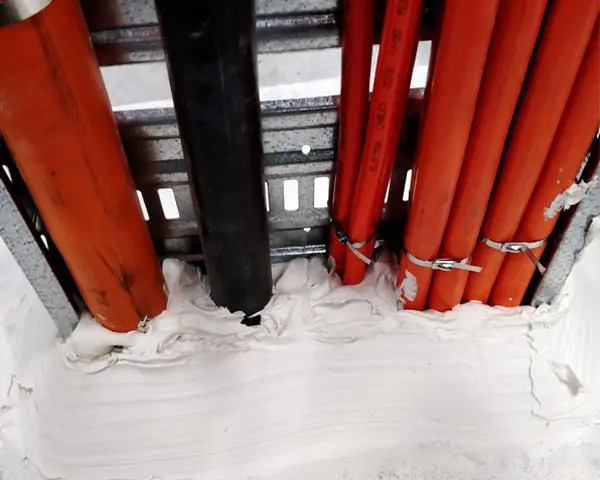
Fire sealants are firestop materials that prevent the spread of fire, smoke, and toxic gases through gaps and openings in fire-rated walls, floors, and other assemblies. They work by either expanding in heat or withstanding extreme temperatures to form a durable, fireproof seal. Common types of fire sealant materials Intumescent sealants These are one of the most common types of fire sealants, often made with an acrylic or latex base. How they work: When exposed to heat, intumescent materials swell and expand significantly to form a dense, fire-resistant char that fills the gap left by melted materials, such as plastic pipes. Best for: Sealing through-penetrations (pipes, cables) that pass through fire-rated barriers, and construction joints with expected movement. Silicone firestop sealants These are highly durable, elastic, and moisture-resistant sealants that can be used in both interior and exterior applications. How they work: Silicone sealants maintain their sealing properties over a wide range of temperatures and prevent the passage of smoke, gas, and fire. They are highly flexible and accommodate building movement. Best for: Sealing construction joints, glazing systems, and service penetrations in areas with high moisture exposure or significant temperature changes. Ablative sealants and coatings These are materials that absorb heat energy during a fire and release it as inert gases. How they work: As they char, ablative sealants form an insulative layer that protects the underlying material from the fire's heat. Best for: Applying as a fire-retardant coating on cable bundles and other service penetrations. Firestop foam Firestop foam is an expanding, flame-resistant foam designed to fill small openings and crevices in fire-rated assemblies. How it works: Like intumescent sealants, some firestop foams also expand when exposed to high temperatures, creating a tight seal against fire and smoke. Best for: Sealing smaller, irregular openings and gaps in walls and floors. How to choose the right fire sealant The appropriate fire sealant depends on the specific application and building material. Consider these factors when making your selection: Penetrant type: For combustible items like plastic pipes, intumescent sealants are most effective because they expand to fill the void left by the melting pipe. For non-combustible penetrants like metal pipes, an acrylic or silicone sealant may be sufficient. Movement capability: For construction joints that experience structural movement, an elastic silicone or high-movement acrylic sealant is necessary to maintain the seal. Environmental conditions: Use a water-resistant silicone sealant for exterior applications or areas with high humidity, as water-based acrylics can wash away before curing. Gap size: Intumescent sealants are ideal for small to medium gaps, while larger, irregular voids may require a combination of mineral wool packing and sealant. Fire rating and standards: Ensure the product is tested and certified for the required fire-resistance rating according to standards like ASTM E814 (UL 1479) and ASTM E1966 (UL 2079). #safelincs, #safelincsindia, #fire, #firehydrant, #firesprinklers, #FAS, #PAS, #firesealant


This is your website preview.
Currently it only shows your basic business info. Start adding relevant business details such as description, images and products or services to gain your customers attention by using Boost 360 android app / iOS App / web portal.
Fire Sealant Materialss
2025-09-24T15:57:23
Fire sealants are firestop materials that prevent the spread of fire, smoke, and toxic gases through gaps and openings in fire-rated walls, floors, and other assemblies. They work by either expanding in heat or withstanding extreme temperatures to form a durable, fireproof seal. Common types of fire sealant materials Intumescent sealants These are one of the most common types of fire sealants, often made with an acrylic or latex base. How they work: When exposed to heat, intumescent materials swell and expand significantly to form a dense, fire-resistant char that fills the gap left by melted materials, such as plastic pipes. Best for: Sealing through-penetrations (pipes, cables) that pass through fire-rated barriers, and construction joints with expected movement. Silicone firestop sealants These are highly durable, elastic, and moisture-resistant sealants that can be used in both interior and exterior applications. How they work: Silicone sealants maintain their sealing properties over a wide range of temperatures and prevent the passage of smoke, gas, and fire. They are highly flexible and accommodate building movement. Best for: Sealing construction joints, glazing systems, and service penetrations in areas with high moisture exposure or significant temperature changes. Ablative sealants and coatings These are materials that absorb heat energy during a fire and release it as inert gases. How they work: As they char, ablative sealants form an insulative layer that protects the underlying material from the fire's heat. Best for: Applying as a fire-retardant coating on cable bundles and other service penetrations. Firestop foam Firestop foam is an expanding, flame-resistant foam designed to fill small openings and crevices in fire-rated assemblies. How it works: Like intumescent sealants, some firestop foams also expand when exposed to high temperatures, creating a tight seal against fire and smoke. Best for: Sealing smaller, irregular openings and gaps in walls and floors. How to choose the right fire sealant The appropriate fire sealant depends on the specific application and building material. Consider these factors when making your selection: Penetrant type: For combustible items like plastic pipes, intumescent sealants are most effective because they expand to fill the void left by the melting pipe. For non-combustible penetrants like metal pipes, an acrylic or silicone sealant may be sufficient. Movement capability: For construction joints that experience structural movement, an elastic silicone or high-movement acrylic sealant is necessary to maintain the seal. Environmental conditions: Use a water-resistant silicone sealant for exterior applications or areas with high humidity, as water-based acrylics can wash away before curing. Gap size: Intumescent sealants are ideal for small to medium gaps, while larger, irregular voids may require a combination of mineral wool packing and sealant. Fire rating and standards: Ensure the product is tested and certified for the required fire-resistance rating according to standards like ASTM E814 (UL 1479) and ASTM E1966 (UL 2079). #safelincs, #safelincsindia, #fire, #firehydrant, #firesprinklers, #FAS, #PAS, #firesealant
2025-09-24T15:57:23


Submit Your Enquiry