
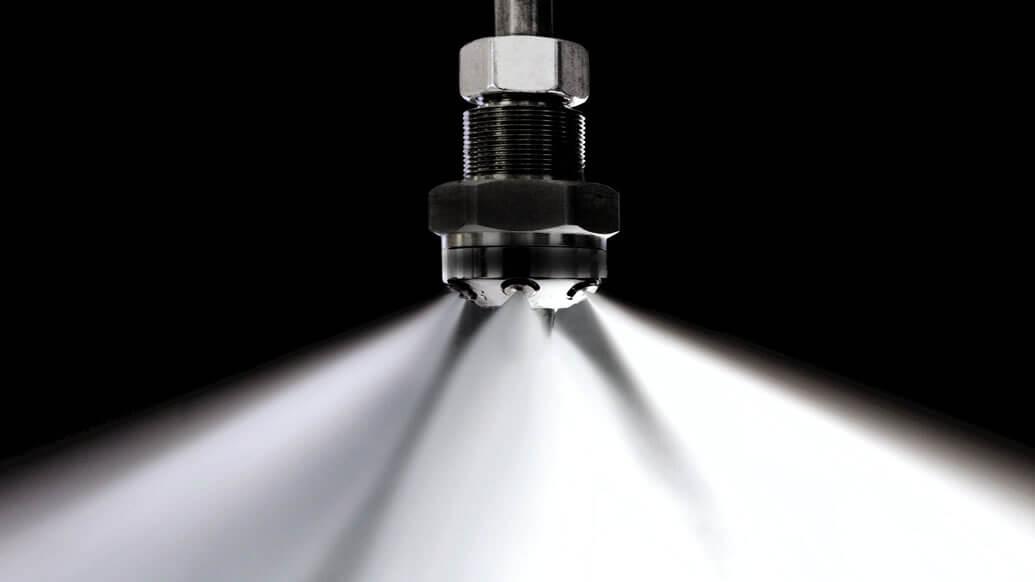
A fire mist system, also known as a water mist system, is a fire suppression technology that extinguishes fires by discharging a fine spray of microscopic water droplets. Unlike traditional sprinklers that use large volumes of water, a water mist system uses significantly less water, leading to minimal property damage. The system suppresses fires by simultaneously cooling the flame, displacing oxygen, and blocking radiant heat. What are water mist fire suppression agents? Sprinklers & Mist Fire Systems How it works Water mist systems extinguish fires by attacking multiple sides of the fire triangle (heat, oxygen, and fuel). Cooling: The tiny water droplets rapidly absorb a large amount of heat as they turn into vapor. This accelerated evaporation dramatically cools the fire and its surrounding gases. Inerting (Oxygen displacement): The volume of the water droplets increases up to 1, 700 times when they evaporate into steam. This expansion displaces the oxygen in the fire's vicinity, effectively suffocating the flames. Radiant heat blocking: The fine water mist acts as a thermal barrier, absorbing radiant heat and preventing it from reaching the fuel source or other nearby combustible materials. Key components A typical water mist system includes: Control station: Monitors the system in standby mode and triggers the release mechanism when a fire is detected. Water reserves: A water tank or connection to a water main supplies the system. High-pressure pump or gas cylinders: Pressurizes the water to be discharged. Piping: Stainless steel pipes deliver the pressurized water to the nozzles. Nozzles: Specially designed nozzles atomize the water into a fine mist. These can be open (deluge type) or closed with heat-sensitive bulbs for automatic activation. Detection system: Can be heat, smoke, or flame-based, depending on the application. Advantages of water mist systems Minimal water damage: They use up to 80% less water than traditional sprinklers, reducing post-fire cleanup costs and damage to sensitive equipment and property. Safety for occupants: The fine, breathable mist rapidly reduces heat and smoke, improving visibility and making conditions safer for evacuation. Environmental friendly: They use only pure water without added chemicals, making them a “green“ fire suppression technology. Versatile: Effective on a wide range of fires, including Class A (ordinary combustibles), Class B (flammable liquids), and some Class K (cooking oils). Fast activation: Rapid deployment can contain and extinguish fires more quickly than traditional sprinklers, preventing them from spreading. Easier installation: They use smaller, more flexible pipes, simplifying installation and retrofitting in existing buildings. Water mist vs. traditional sprinklers Feature Water Mist Systems Traditional Sprinkler Systems Water usage Significantly less water (e.g., 80% less). Relies on large volumes of water. Extinguishing method Multi-faceted: cooling, oxygen displacement, and radiant heat blocking. Primarily cools by wetting the fuel surface. Water damage Minimal, leading to less property damage. Can cause extensive water damage and flooding. System pressure High-pressure systems are common to atomize water effectively. Operates at lower pressure. Piping size Smaller and more flexible. Larger and more rigid. Coverage The fine mist can reach hidden fire sources more effectively. Less effective at reaching fires in concealed spaces. Maintenance Proper maintenance is critical for a water mist system to function reliably. This generally includes a mix of regular self-checks and professional servicing: Daily/Monthly checks: Routine visual inspections of the control panels, pumps, and gauges. Semi-annual servicing: Professional checks of water flow, pump capacity, filters, and valves. Annual professional inspection: A certified technician will conduct a thorough test of all system components, including alarms, nozzles, piping, and pressure levels.


This is your website preview.
Currently it only shows your basic business info. Start adding relevant business details such as description, images and products or services to gain your customers attention by using Boost 360 android app / iOS App / web portal.
Fire Mist System Protection
2025-10-07T10:53:53
A fire mist system, also known as a water mist system, is a fire suppression technology that extinguishes fires by discharging a fine spray of microscopic water droplets. Unlike traditional sprinklers that use large volumes of water, a water mist system uses significantly less water, leading to minimal property damage. The system suppresses fires by simultaneously cooling the flame, displacing oxygen, and blocking radiant heat. What are water mist fire suppression agents? Sprinklers & Mist Fire Systems How it works Water mist systems extinguish fires by attacking multiple sides of the fire triangle (heat, oxygen, and fuel). Cooling: The tiny water droplets rapidly absorb a large amount of heat as they turn into vapor. This accelerated evaporation dramatically cools the fire and its surrounding gases. Inerting (Oxygen displacement): The volume of the water droplets increases up to 1, 700 times when they evaporate into steam. This expansion displaces the oxygen in the fire's vicinity, effectively suffocating the flames. Radiant heat blocking: The fine water mist acts as a thermal barrier, absorbing radiant heat and preventing it from reaching the fuel source or other nearby combustible materials. Key components A typical water mist system includes: Control station: Monitors the system in standby mode and triggers the release mechanism when a fire is detected. Water reserves: A water tank or connection to a water main supplies the system. High-pressure pump or gas cylinders: Pressurizes the water to be discharged. Piping: Stainless steel pipes deliver the pressurized water to the nozzles. Nozzles: Specially designed nozzles atomize the water into a fine mist. These can be open (deluge type) or closed with heat-sensitive bulbs for automatic activation. Detection system: Can be heat, smoke, or flame-based, depending on the application. Advantages of water mist systems Minimal water damage: They use up to 80% less water than traditional sprinklers, reducing post-fire cleanup costs and damage to sensitive equipment and property. Safety for occupants: The fine, breathable mist rapidly reduces heat and smoke, improving visibility and making conditions safer for evacuation. Environmental friendly: They use only pure water without added chemicals, making them a “green“ fire suppression technology. Versatile: Effective on a wide range of fires, including Class A (ordinary combustibles), Class B (flammable liquids), and some Class K (cooking oils). Fast activation: Rapid deployment can contain and extinguish fires more quickly than traditional sprinklers, preventing them from spreading. Easier installation: They use smaller, more flexible pipes, simplifying installation and retrofitting in existing buildings. Water mist vs. traditional sprinklers Feature Water Mist Systems Traditional Sprinkler Systems Water usage Significantly less water (e.g., 80% less). Relies on large volumes of water. Extinguishing method Multi-faceted: cooling, oxygen displacement, and radiant heat blocking. Primarily cools by wetting the fuel surface. Water damage Minimal, leading to less property damage. Can cause extensive water damage and flooding. System pressure High-pressure systems are common to atomize water effectively. Operates at lower pressure. Piping size Smaller and more flexible. Larger and more rigid. Coverage The fine mist can reach hidden fire sources more effectively. Less effective at reaching fires in concealed spaces. Maintenance Proper maintenance is critical for a water mist system to function reliably. This generally includes a mix of regular self-checks and professional servicing: Daily/Monthly checks: Routine visual inspections of the control panels, pumps, and gauges. Semi-annual servicing: Professional checks of water flow, pump capacity, filters, and valves. Annual professional inspection: A certified technician will conduct a thorough test of all system components, including alarms, nozzles, piping, and pressure levels.
2025-10-07T10:53:53


Keywords
- Water mist for Class A B K fires
- Fast fire suppression technology
- Fire detection and control station
- Minimal water damage fire system
- Eco-friendly fire suppression technology
- High pressure water mist system
- Water mist system components
- Water mist vs traditional sprinklers
- Fire mist system protection
- Water mist fire suppression systems
Submit Your Enquiry